在東京銀座的繁華表象之下,隱藏著這樣一處被光影切割的沈默角落。
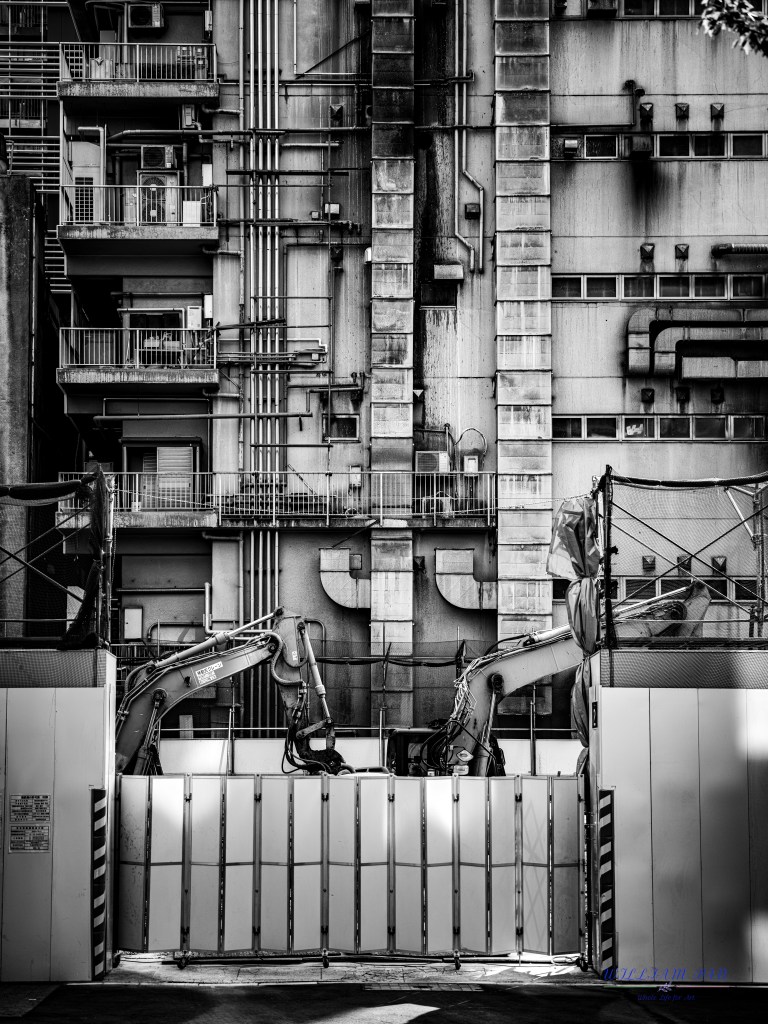
這張高對比度的黑白照片,捕捉到了這座城市新陳代謝的粗礪瞬間。畫面的主體是一堵猶如巨獸脊骨的老舊建築外牆,無數冰冷的管道如同血管般在其上交錯盤繞,與那些略顯疲憊的空調外機共同記錄著歲月的流逝。
前景中,兩台巨大的挖掘機手臂在施工圍欄後對峙,呈現出一種近乎對稱的機械張力,彷彿是兩隻在廢墟中沈睡或對話的鋼鐵巨獸。黑與白的強烈反差,將金屬的冷冽、混凝土的粗糙以及光影的虛實演繹得淋漓盡致。
這不是霓虹燈下的銀座,而是它卸下妝容後最真實、最充滿力量感的背面。在「William Pan」的鏡頭下,城市的建設與廢棄、冰冷的機械與流動的時間,共同構成了一首關於繁華與荒涼的都市詩篇。
Beneath the bustling veneer of Tokyo’s Ginza lies a silent corner carved by light and shadow, captured in this evocative frame.
This high-contrast, black-and-white photograph freezes a visceral moment of the city’s “metabolism." The subject is an weathered building facade resembling the spine of a massive beast, where countless cold pipes intertwine like veins, recording the relentless passage of time alongside weary air conditioning units.
In the foreground, two massive excavator arms stand in confrontation behind construction barriers, creating a nearly symmetrical mechanical tension—as if two steel behemoths are either slumbering or holding a quiet dialogue amidst the urban renewal. The stark interplay of black and white vividly portrays the chill of metal, the grit of concrete, and the dance between the tangible and the ethereal.
This is not the neon-lit Ginza of the postcards; it is the city’s most authentic and powerful “backside," stripped of its makeup. Through the lens of William Pan, the cycle of construction and decay, the coldness of machinery, and the flow of time converge into a haunting urban poem of both prosperity and desolation.
 一生為藝術為攝影 - A Whole Life for Photographic Art